37signals: From Bootstrapped Beginnings to Project Management Success: The Journey with Jason Fried.
Company profile
Company business details
Motivation to build the product
The founders, led by Jason Fried, were motivated by their experiences in running a web design and consulting firm, where they saw first-hand the difficulties teams faced in managing projects and communication. They realized there was a significant gap in the market for an easy-to-use project management tool tailored specifically for small businesses, prompting them to create Basecamp. The desire to build a sustainable and independent business without relying on outside funding also played a pivotal role in their motivations.Problem that their product solves
37signals' product, Basecamp, addresses the problem of ineffective project management and communication within small and medium-sized teams. The end users are businesses looking for a straightforward way to keep their projects organized and ensure accountability among team members. Solving this problem is important for these users, as it directly impacts their overall productivity and the smooth operation of their projects.Their unfair advantage
Basecamp's unfair advantage lies in its focus on simplicity and usability, catering specifically to small and medium-sized businesses without the burden of complexity that larger enterprise solutions often impose. Their long-standing history and reputation as a bootstrapped company also resonate with many customers who value independence and sustainability over venture capital-driven growth.Strategies
Pre-Launch (Product Development & MVP)
Bootstrap Approach
Jason Fried encourages entrepreneurs to bootstrap their businesses instead of seeking venture capital. He shares that bootstrapping helps founders practice the fundamental skill of making money. By keeping overhead low and avoiding external investment, entrepreneurs can focus on generating profits and sustainability rather than chasing rapid growth, which is common in venture capital-funded businesses. This method fosters creativity and independence in business execution. Fried argues that almost all successful companies aren’t venture-backed and emphasizes the fulfillment and potential profitability in building a business without seeking external funding.
Launch Stage
Two-week Cool Down
After completing a project cycle, Basecamp's team engages in 'two-week cool downs,' which serve as recovery periods that allow team members to refine what they've created and shape the next project without the stress of tight deadlines. This concept emphasizes the importance of taking breaks and reducing burnout while preparing for future projects, maintaining a healthy work-life balance in the highly creative environment.
Transition to Basecamp Focus
In 2014, 37signals transitioned to focus solely on Basecamp, their leading product. The founders made a strategic decision to change the company's name to Basecamp to emphasize this singular focus. They integrated their other products into Basecamp and redirected all efforts to enhance their most successful offering as a response to the growing demands of the tech industry and the limitations of their small team. This strategic pivot allowed them to overhaul Basecamp into a powerful platform that continued to grow and dominate their market.
Shape Up Methodology
Jason Fried discusses the development framework called 'Shape Up' used at Basecamp for product development. This methodology involves setting project time limits (maximum of six weeks) by defining appetites instead of estimates, leading to focused programming and design. Teams work on features in pairs to boost accountability and collaboration without the complexity of large groups. This method significantly reduces the chance of demotivating long-running projects that do not see completion and maintains the excitement of delivering results quickly. This unique structure also helps control the workload and fosters creativity.
Website Redesign for Differentiation
Jason Fried emphasized the importance of regularly redesigning the Basecamp website to ensure it stands out in the crowded project management software market. He personally enjoys the process of rethinking the words and connections presented on their site, aiming to create a different kind of engagement with customers compared to competitors. This strategy was part of their approach to remain relevant and direct in communication, as they are set to launch a new version of their site that combines the homepage and features into just two pages, thereby making it easier for users to navigate and understand their offerings.
Growth Stage
Launch of HAY Email Service
Despite previously limiting their focus to one product, Basecamp’s founders felt motivated to create a new email service named HAY. They launched this product because they believed email had been neglected and required significant improvement. Their innovative approach started with a feature called the 'screener,' allowing users to decide who could email them, thus granting them more control over their inboxes. This product launch marked a significant return to multi-product offerings for the company.
Interview Podcast Series
Claire Lu launched a podcast series named 'The Heartbeat' where she interviewed various leaders, including Jason Fried, the CEO of Basecamp. By sharing insights from over 50 episodes, she created a platform that not only showcased her growth as a leader but also provided valuable lessons from established leaders, enhancing her brand and expanding her reach in the entrepreneurial community. The podcast served as a way for Claire to engage with knowledgeable guests, learn from their experiences, and foster community among current and future leaders.
Be Authentic and Trust Yourself
Throughout the interviews in her podcast series, Claire emphasized the importance of authenticity in leadership. She shared her personal journey about wishing she had learned to 'be more like herself' earlier in her leadership path. This openness resonated with her audience, showcasing vulnerability, and encouraging other leaders to embrace their unique styles without feeling pressured to emulate others. This strategy helped build a community that values genuine leadership.
Engagement Through Provocative Questions
Claire used a compelling format for her interviews by asking leaders thought-provoking questions about their leadership lessons. She invited her guests to reflect on what they wished they knew earlier in their careers. This not only engaged the interviewees but also provided rich content for listeners, creating relatable narratives that they could learn from and apply to their own experiences.
Fostering a Culture of Change and Experimentation
Throughout the podcast episodes, Jason Fried stressed the importance of adaptability and being open to change. He shared insights on evolving responsibilities and the need to let go of old ideas to embrace new practices as a company grows. By sharing these personal and organizational lessons, Claire positioned her podcast as a source of real-world knowledge on how to navigate the challenges of leadership, promoting a culture of continual learning and flexibility.
Focus on Long-term Sustainability
Both Claire and Jason discussed the significance of long-term thinking in leadership and business practices. Jason shared lessons from Basecamp's 20-year history, emphasizing the importance of making decisions that support longevity rather than short-term gains. This focus on sustainability resonates with entrepreneurs looking to build lasting businesses and evokes a shared vision among listeners to adopt similar practices.
Creating a Collaborative Community
Claire actively involved her interview guests in discussions, encouraging a collaborative atmosphere during the podcasts. By diving deep into the challenges faced by different leaders and sharing their personal stories, she created a sense of camaraderie among listeners and fostered a supportive network where innovative ideas could flourish. This strategy emphasizes the importance of sharing real experiences which create connections among modern leaders.
Emphasizing Profit Over Revenue
Fried highlights the significance of prioritizing profits rather than revenue as a critical measure of success. Unlike many venture-backed companies, which may report high revenue without profitability, Fried’s company focuses on ensuring that they earn more money than they spend. He mentions that they've maintained profitability for 24 consecutive years, asserting that one doesn't need to aim for unicorn status; rather, they should manage to make money and keep healthy margins allowing for experimentation.
Creating Alternative Pricing Models
As part of their expansion into 'Once,' a series of non-subscription software products, Basecamp emphasizes creating a no-frills, one-time purchase model for software, starting with the relaunch of their original group chat tool, Campfire. This model addresses subscription fatigue and offers users the ability to buy and own the software, thereby avoiding ongoing costs. They plan to target 'the fortune 5 million,' focusing on smaller businesses that might find this pricing model more accessible and favorable.
Asynchronous Communication Model
At 37signals, the company does not rely on shared calendars for scheduling meetings, which allows them to have a more flexible and less congested work environment. Jason Fried encourages staff to reach out directly to colleagues when they need their time instead of scheduling lengthy meetings, leading to more spontaneous and purposeful interactions. This strategy reflects their commitment to maintaining a productive work culture and avoiding the burden of unnecessary calendar management.
Maturity & Scaling
Publication of Business Philosophy Books
Basecamp's founders adopted a strategy of sharing their business philosophies by writing books like 'Rework' and 'It Doesn't Have to Be Crazy at Work.' This was not strictly a marketing plan but organically turned into an effective way to showcase their business acumen. They used the analogy of chefs sharing their recipes, allowing others to understand their methods and philosophies. This not only helped build a community around their ideas but also led to increased interest in their software products.
Direct Feel with Less Automation
Fried draws parallels between driving an old car with a manual transmission and managing a business, emphasizing the engagement and connection individuals can have with their work. He believes that a 'stick shift' company encourages hands-on management and direct involvement, while automatic systems (larger, funded companies) often lead to disconnection and sloppy practices. By promoting simpler systems with more direct involvement, businesses can maintain a strong grasp over operations and decisions.
Focusing on Small to Medium-Sized Businesses
Jason Fried has maintained that Basecamp was created with small to medium-sized businesses in mind, an audience often overlooked by competitors seeking larger enterprise accounts. By positioning themselves as the solution fit for smaller teams, they've been able to retain a loyal user base that values the straightforward, functional attributes of their software rather than complex systems. This strategy has allowed Basecamp to thrive amid competitors chasing big accounts and left them less pressured by the expectations placed on larger organizations.
Capping Subscription Prices for Stability
Fried mentions that Basecamp has a subscription model capped at $299 a month, which creates pricing stability for the company and prevents the reliance on a handful of large clients contributing disproportionate revenue. This approach ensures that the business can focus on its core audience of smaller enterprises without the risk of having to change its offering based on the demands of high-paying clients. Such a strategy helps maintain a sustainable and independent business model that aligns well with their identity.
Profitability-Focused Business Model
Fried states that the foundational success of 37signals hinges on making more than they spend, allowing them to keep the company running regardless of market fluctuations. This profit-first strategy empowers them to create new products and ideas without the constant pressure of investor expectations and provides a strong buffer as they continue to explore new opportunities.
Saturation & Retention
Politic-Free Work Environment Policy
In response to an increasingly contentious workplace due to political discussions, Basecamp established a no-political-discussion policy in their work platforms. This decision aimed to refocus employees on work-related tasks instead of divisive topics. Although this policy led to some backlash on social media and a few employees leaving, it ultimately created a more focused work environment. The company was able to attract new employees who shared their vision and wanted to focus solely on business tasks.
Renewal or Pivot
Constant Innovation Within a Steady Framework
Even after 20 years, Basecamp continues to innovate by committing to building new products that align with their identity as builders. Jason Fried highlighted their recent move into new ideas, stating that creating new products like 'Hey' and exploring various other projects keeps the company agile and fulfilling in a way that draws in and retains talent while also serving their customers better. This strategy reinforces their entrepreneurial spirit while maintaining focus on their established product lines.
Learn more about 37signals
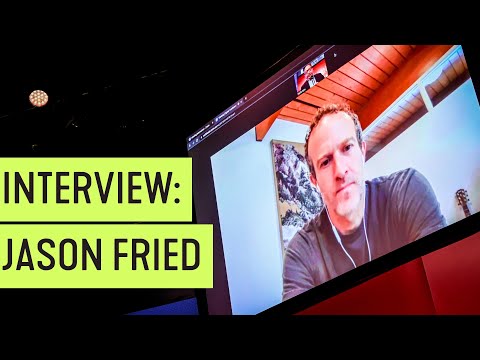
Interview with Jason Fried on the past, present & future of Basecamp and 37Signals

The Heartbeat Interview - Jason Fried, Co-Founder & CEO of Basecamp

Jason Fried challenges your thinking on fundraising, goals, growth, and more